
Every year on March 22nd, social media feeds fill with blue-themed infographics, landmarks are illuminated in sapphire light, and global leaders deliver solemn speeches about “our most precious resource.” But beneath the hashtags and the ceremonies lies a stark reality: World Water Day is not a celebration of abundance, but a global mobilization against a silent crisis.
Established by the United Nations in 1993, this day serves as a powerful annual reminder that while water covers 70% of our planet, the freshwater that sustains human life is a finite, fragile, and increasingly contested treasure.
So, why does the world stop to recognize this day? It isn’t just about marking a date; it’s about addressing the fundamental intersection of health, economy, and human dignity.
1. To Confront the Numbers That Don’t Add Up
The primary reason for World Water Day is to drag uncomfortable statistics into the light. We live in an era of unprecedented technological advancement, yet the “water gap” remains a chasm.
- The Access Crisis: Roughly 2.2 billion people—one-third of the global population—still live without safely managed drinking water (Organisation, 2023).
- The Sanitation Gap: Over 3.5 billion people lack access to safely managed sanitation, a leading cause of preventable diseases (UN, 2025).
- The Child Mortality Factor: Every single day, over 1,000 children under the age of five die from diseases linked to contaminated water and poor sanitation (UNICEF, 2025).
World Water Day forces the global community to reckon with these figures, turning abstract data into a catalyst for policy change.
2. To Highlight “Invisible” Water
Each year, World Water Day adopts a specific theme to educate the public on often-overlooked aspects of the water cycle. In recent years, themes like “Groundwater: Making the Invisible Visible” have shifted the focus from the blue we see (rivers and lakes) to the vast reserves beneath our feet (UNESCO, 2022).
Groundwater provides half of all drinking water worldwide and 40% of the water used for irrigation. Yet, because it is out of sight, it is frequently over-extracted and polluted. World Water Day acts as a global classroom, teaching us that the health of our aquifers is directly tied to the food on our plates and the stability of our environment (UNESCO, 2022) (Nations), 2022).
3. Water as a Catalyst for Peace (and Conflict)
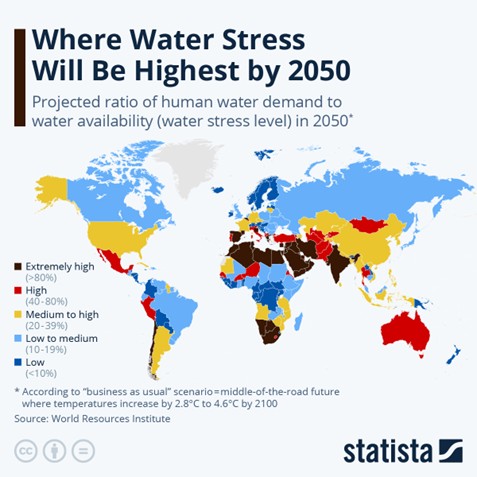
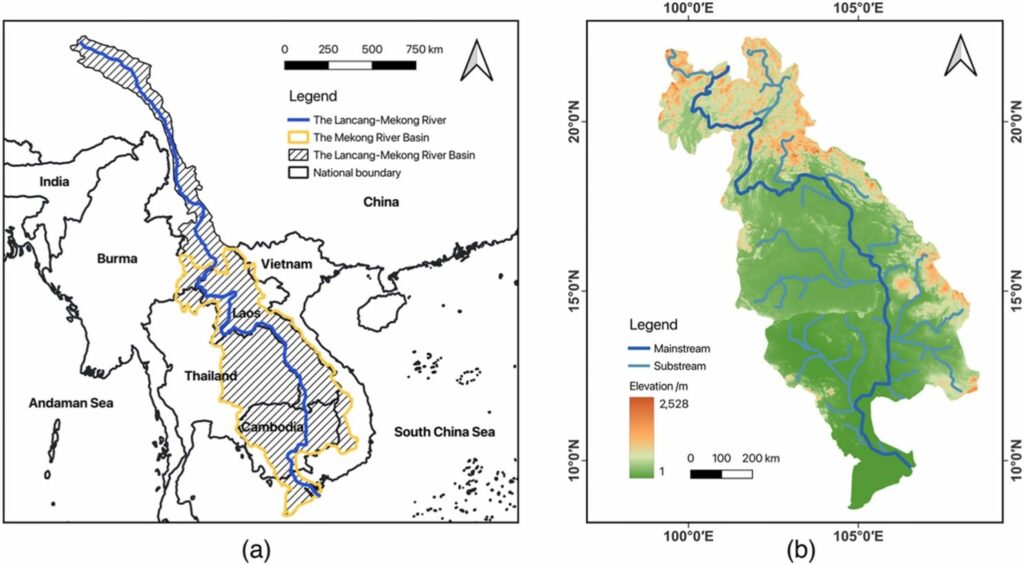
Water does not recognize national borders. There are 263 transboundary lake and river basins that are shared by two or more countries. As climate change makes rainfall more erratic, water is increasingly becoming a “blue gold” that can either spark conflict or force cooperation (Nations), 2021).
The UN uses March 22nd to advocate for Water Diplomacy. When countries cooperate on water management, it creates a ripple effect of stability. By celebrating this day, we acknowledge that water is not just a commodity to be traded; it is a human right and an instrument for peace (UN, 2025).
4. The Economic Engine: No Water, No Wealth
From the silicon chips in our smartphones to the denim in our jeans, every sector of the global economy relies on water.
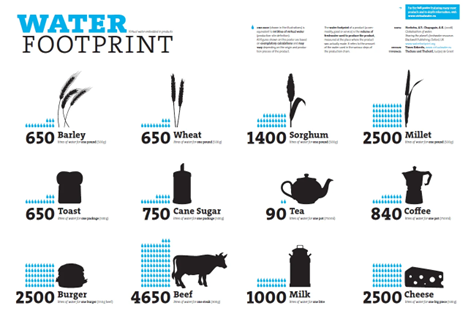
- It takes approximately 2,700 litres of water to produce a single cotton t-shirt.
- Agriculture alone accounts for 70% of global freshwater withdrawals (WWF, 2011).
World Water Day serves as a wake-up call for the corporate world. It encourages “Water Stewardship”—moving beyond simple corporate social responsibility to integrating water risks into the very core of business models. It reminds us that a water-stressed world is an economically unstable world.
5. Empowering the Individual: The “Drop in the Bucket” Myth
Perhaps the most important reason for the celebration is to dispel the myth that individual action doesn’t matter. World Water Day often features the story of the Hummingbird—a tale popularized by the late Nobel Peace Prize laureate Wangari Maathai. While a great forest fire rages, a tiny hummingbird carries drops of water in its beak. When the other animals mock its small efforts, the bird replies, “I am doing the best I can.” (Movement, 2008)
The day empowers citizens to rethink their own “water footprint.” Whether it’s fixing a leaky faucet, reducing meat consumption, or supporting local conservation NGOs, the collective action of millions creates the political will necessary for large-scale change.
We celebrate World Water Day because we cannot afford to take water for granted. It is a day of advocacy, a day of education, and a day of action. It is the one day a year when the world agrees on a single, undeniable truth: Water is life, and life is worth protecting.
Ultimately the World Water Day is about valuation. How do we value water? Not just in dollars and cents, but in its value to our culture, our health, and our future.
Written by :
Prajwal Patil, Project Engineer
BEE Incoporations